|
 News
News
|
Mexico | Prevention
Mexico strengthens prevention efforts to protect its domestic banana production from major pests The Mexican National Service for Agrifood Health, Safety and Quality (Senasica) is taking action to protect banana crops from pests such as Moko disease, the Banana Bronzing Mite, and to prevent the entry of Foc R4T into Mexico. 6/11/2026
 More than 80 technicians from Senasica provide ongoing support to banana producers. More than 80 technicians from Senasica provide ongoing support to banana producers.
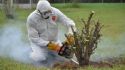
To protect Mexico's national banana production, the Mexican Ministry of Agriculture and Rural Development maintains ongoing epidemiological surveillance, phytosanitary diagnosis, and pest management activities in the country's main banana-producing regions. More than 80 technicians from the National Service for Agrifood Health, Safety, and Quality (Senasica) provide continuous support to banana producers in 16 of the country's 32 states, offering technical assistance and training for the control and timely detection of regulated banana pests. Among the implemented actions are exploration, sampling, diagnosis, control of infection outbreaks, and biological control measures to strengthen prevention and mitigation of the risk of spreading various pests, such as Moko disease and the Banana Bronzing Mite, among others. In 2025, drones monitored more than 6 million banana plants in Veracruz, Colima, and Michoacán, and more than 6.5 million plants in Chiapas and Tabasco. Senasica, exercising its authority, inspects cargo and tourist luggage at points of entry into the country to prevent the introduction of high-risk fruits and goods. As a result of these monitoring efforts, more than 22,000 banana plants and propagating material are seized each year and incinerated as a preventative measure. It is important to note that Mexico prohibits the import of fresh fruit or propagating plant material from any country due to the risk of introducing pests and because Mexican producers harvest enough bananas to meet domestic demand. Following reports of the alleged illegal entry of this fruit into the country, the General Directorate of Plant Health of the National Service for Agrifood Health, Safety and Quality (SENASICA) requested information from the Guatemalan phytosanitary authority to trace the shipments, from field production to packaging. This information is necessary to grant the permits, authorizations, and sanitary certifications required to guarantee the safe transit of banana shipments crossing through Mexico to other countries. Given that the illegal introduction of goods is an issue that must be addressed through inter-institutional collaboration based on the responsibilities of each agency, the working group V of the National System for Agrifood Health, Safety and Quality (SINASICA) agreed to establish a working group to address reports of livestock and agrifood product smuggling. It was proposed that the working group be made up of the Ministry of National Defense (Sedena), the National Guard, the National Customs Agency of Mexico (ANAM), the Federal Commission for Protection against Sanitary Risks (Cofepris), the Federal Attorney for Environmental Protection (Profepa), the Ministry of the Navy, the Attorney General's Office (FGR), and will be convened by Senasica to address this and other complaints about agricultural and aquaculture products.
Sign up to our newsletter
|
|||||||||
© Copyright Infoagro Systems, S.L.